
Bow Street Beverage Currated Wine Kits
Welcome to the inaugural release of the Bow Street Beverage Wine Tasting Kit! We are incredibly excited to launch this adventure, and we hope you’ll join us in exploring the vast, delicious world of wine. Think of this as your ticket to a world of wine, giving you access to our absolute favorite bottles. We hand-select sets of four stellar wines—including brand-new arrivals and hidden gems you won’t want to miss. We’ll cover a whole range of styles and pack each set. Each kit comes with a post card from the region giving you some of our notes on the front and a place for your notes and rating on the back, so you never forget another favorite sip. More insider write-ups on our blog so you can taste and learn right along with us. Each set is sold at a discounted price.
Choose Your Wine Adventure
We have two fantastic tiers to match your palate, both curated to bring you incredible savings on hand-selected wines every single month.
The Connoisseur Kit delivers premium, standout bottles for the adventurous palate. You will receive around $100 worth of exceptional wine, packaged up for a sweet bundled deal that saves you 10%.
The Enthusiast Kit focuses on crowd-pleasing, delicious bottles that are perfect for everyday sipping. You will receive around $60 worth of fantastic finds, offered at the same great savings.
Cheers to the first set of many great bottles!
Here are the wines:
The Connoisseur Kit Summer 2026 (Famille Ogereau En Chenin Anjou Blanc, Peyrassol Les Commandeurs Rosé, Michel & Sylvain Tete Domaine du Clos du Fief Juliénas Tradition, Purple Hands Lone Oak Ranch Pinot Noir). This month’s connoisseur box is $89.96
The Enthusiast Box Summer 2026 (Herrero Verdejo Erre de Herrero Rueda 2024, Maria Papoila Loureiro – Alvarinho, Vinho Verde 2024, Venta la Vega Adaras Aldea, Almansa 2022, Juanvi Viticultor Rubielos de Mora, Aragon 2024)
Connoisseur Kit
The focus of the inaugural Bow Street Beverage Connoisseur Kit is on exceptional craft, terroir, and expressive winemaking from standout regions across France and Oregon’s Willamette Valley. This set highlights passionate producers who practice organic farming, dry farming, and a light-touch approach in the cellar to let their unique vineyard soils shine. Whether you’re enjoying a crisp, schist-driven Chenin Blanc, a benchmark organic Provence rosé, a chillable Cru Beaujolais brimming with red fruit, or an elegant, dry-farmed Pinot Noir, these four versatile selections offer incredible value and precision. Join us in exploring these phenomenal bottles—each chosen to elevate your summer dining and bring a true sense of place right to your glass!
Famille Ogereau En Chenin Anjou Blanc 2024; Loire Valley, France
This wine is a Bow Street exclusive in Maine. Famille Ogereau is part of the new wave of producers in Anjou and Saumur, in France’s Loire Valley, which I find very exciting. Some of these young producers are making my favorite Chenin Blancs from anywhere. In terms of value, this wine is definitely in that group.
Emmanuel Ogereau farms organically and makes his wines with a light touch (doing as little as possible in terms of “winemaking”). His happy, playful personality comes through in this wine, which features well-defined fruit and a strong core of minerality. He picks early to avoid botrytis (a drying mold that makes great sweet wines but is not always ideal for dry wines) and maintain freshness. This is helpful, as his vines are on the schist-heavy soils in the part of the region known as Anjou Noir, which can tend toward high ripeness without as much balancing acidity as Ogereau’s wines have.
With its ample flavor and palate-cleansing crispness, this would pair beautifully with a wide variety of foods, including buttery seafood preparations (fish or shellfish), roasted pork, and savory mushroom dishes such as risotto.
Peyrassol Les Commandeurs Rosé 2024; Côtes de Provence, France
Peyrassol Les Commandeurs is my benchmark for Provence Rosé. There are higher-end examples out there, including a couple from Peyrassol, but this one is so utterly classic, and so well valued, that it sets my standard. People looking for elegant, refreshing, restrained pink wine, particularly for under $30, seem to always be happy with this one.
Commanderie de Peyrassol was founded by the Knights Templar in 1204 and has operated continuously since. These days, all farming is certified organic. Beyond that, cover crops are planted between the rows, which increases biological diversity in the vineyards, improves soil health, and prevents erosion. Rigorous vine pruning limits yields and improves quality. In short, a lot of effort goes into making the best wines possible. Many growers in Provence do not take anywhere near this type of care. The owner, Philippe Austruy, credits the estate’s limestone-rich soil in producing the freshness that their wines always have, as opposed to the candy fruit flavors that many other rosés display.
This rosé pairs well with pan seared scallops, lighter seafood preparations (including recipes that feature tomatoes, which can be difficult to pair with white wines), and salad. I find a lot of joy drinking it on its own, outside in the sun.
Michel & Sylvain Tete Domaine du Clos du Fief Juliénas Tradition 2024; Beaujolais, France
Domaine du Clos du Fief is a new discovery for me, and one that I’m pretty excited about. They are in Juliénas, one of the Crus (named villages) of Beaujolais. Make no mistake: this is nothing like the candy-tasting Nouveau with flowers on the label. As Europe gets warmer, it is increasingly difficult to find the lighter side of Cru Beaujolais, brimming with red fruits and showing a lot of restraint. That’s exactly what you get here. It’s a great warm weather red that can do well with a slight chill if you like that.
Like Peyrassol, farming at Clos du Fief includes ample cover crops, to promote life both within (microbial) and above (beneficial insects) the soil. The domaine thinks this is an important element in the ultimate quality of their wines. Even tilling is limited, to allow all of that life to fully flourish.
This Cru Beaujolais will pair well with almost anything you do with chicken or turkey (classic Thanksgiving wine). You can also think of it with pizza, or whatever is coming off the grill. It’s very versatile as a palate-cleansing red. As such, if you like red wine with seafood, this is a good fit.
Purple Hands Lone Oak Ranch Pinot Noir 2023; Willamette Valley, Oregon
Purple Hands is another new discovery for me. As an avid fan of all things Willamette Valley, I don’t know how the producer wasn’t already on my radar. The wines are terrific. This is my current favorite Pinot Noir for under $30, from anywhere. It’s a complete wine with a clear sense of place, which is difficult to find in this price range. The beauty that is Willamette Valley Pinot Noir is apparent here, with its combination of red and dark fruits, soil notes, and floral character.
Cody Wright makes these wines. He is the son of long-time Oregon winemaker Ken Wright. To me, Cody’s wines are more delicate and nuanced than his father’s; I prefer these. Vineyards are farmed organically and dry farmed (no irrigation on mature vines). Dry farming is practiced by many of the best producers in the Willamette Valley. Some, including Purple Hands, are even members of a dry farming group called Deep Roots Coalition (deeprootscoalition.org). In short, the practice encourages roots to dig deep for nutrients and water, promoting higher quality across vintages, and intensifying wines’ sense of place. The vast majority of high quality wine from France and Italy is from vineyards that are farmed this way.
Classic pairings for this Pinot Noir include duck, chicken and turkey (another Thanksgiving classic), mushroom dishes, beets, and herbed preparations of pork or lamb. The earthy, savory wine harmonizes with herbal, savory foods.
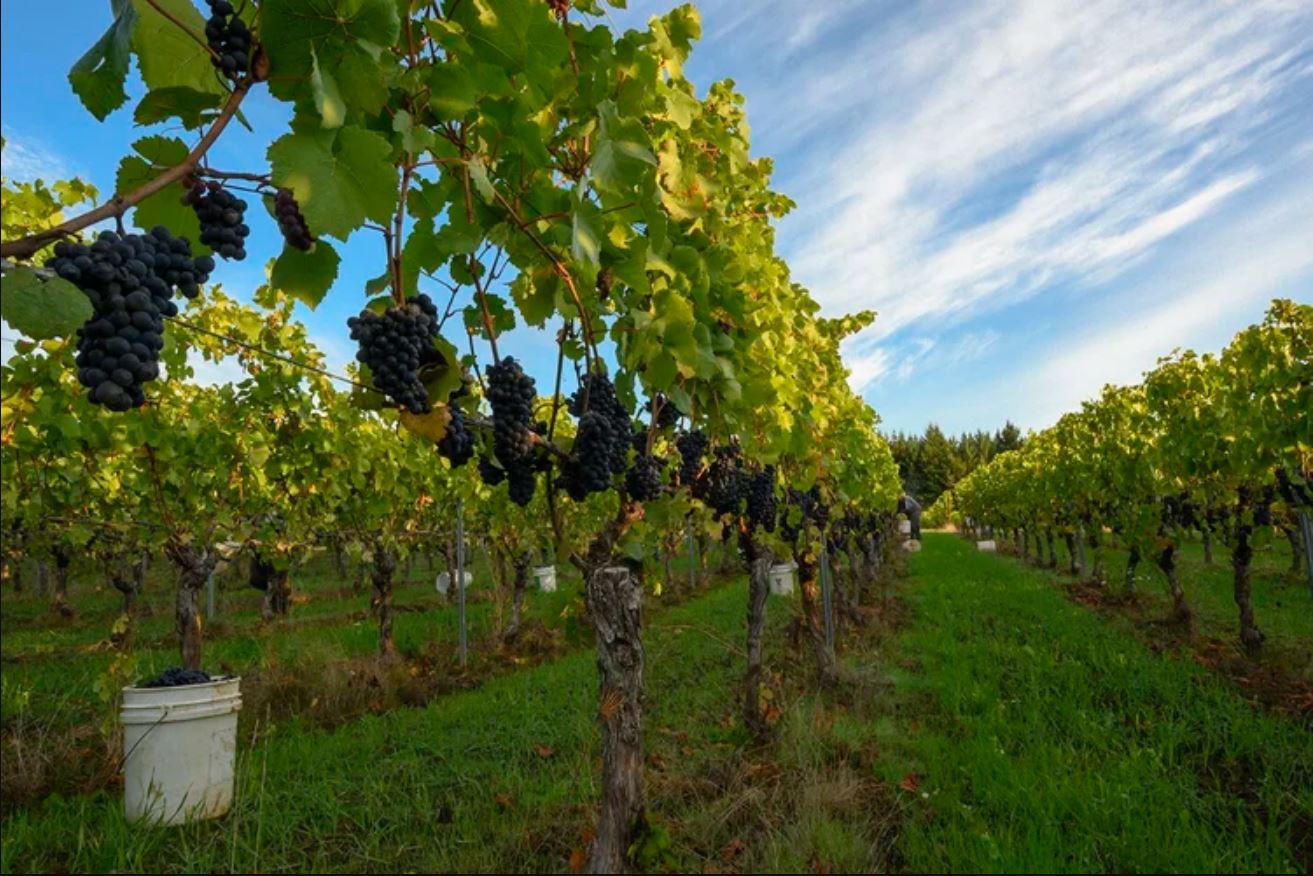
Ready for harvest – photo courtesy of purplehandswine.com
Enthusiast Box
The focus of the inaugural Bow Street Beverage Enthusiast Kit is Spain and Portugal, where expert winemakers rely on traditional know-how to craft unique and incredible wines at bargain prices. While French grapes get most of the attention in the USA (we’re looking at you, Cabernet Sauvignon and Chardonnay!), Spain and Portugal offer more off-the-beaten path opportunities for affordable gems that are just as delicious and accessible. The wines are food-friendly and perfect for summer get-togethers. Join us in exploring these four wines – two classic whites with a twist, one chillable red, and a heftier red that highlights how much depth and complexity abounds on the Iberian Peninsula!
Winery: Bodega Herrero
Wine: Herrero “Erre de Herrero”, Rueda 2024
Region: Rueda, Spain
Grape(s): Verdejo
Farming: Organic
If you like this, try the more bombastic Nisia Old Vine Verdejo or try a rich, white blend from Rioja: Muga’s barrel-aged Rioja Blanco!
Although Bodega Herrero is relatively new to the wine scene, it’s backed by a long family history in winemaking. Brothers Jose Maria Herrero, Juan Herrero, and Javier Herrero founded the winemaking company in 2011 in the town of Segovia in the Rueda region of Spain. Their father, Jose María Herrero, founded Bodegas Blanco Nieva and invested heavily in promoting the region’s wines, while their mother, Janine Vedel, is from the southern French wine-growing region of the Languedoc.
The brothers combine French winemaking influence with traditional Spanish grape growing practices (viticulture). The main grape of the estate is the white Verdejo, which is indigenous to Rueda. This grape produces aromatic, full-bodied white wines with crisp acidity, herbal and citrus aromas, and a bitter finish. The vines for this wine, the Erre de Herrero, are organically farmed. The vineyards are at high elevation, which is unusual for the eastern pocket of Rueda where they grow. High elevation allows grapes to ripen more slowly, resulting in more complex and refined flavors with less emphasis on high alcohol.
The resulting juice was fermented in stainless steel with selected yeasts from the property. This is a twist on natural fermentation. It encourages the naturally present beneficial yeasts while controlling the strains that produce undesirable, funky flavors.
The Erre de Herrero is a classic expression of Verdejo with no oak influence, just pure varietal character. It showcases the grape’s intensity with its layers of fruit and rich minerality. Its bitter note on the finish makes it a great option for food. Try pairing this with Mediterranean dishes that have an inherent sweetness like fennel sausage with grilled onions and sweet peppers, braised chicken with heirloom tomatoes, or smoked salmon.
Winery: Lua Cheia-Saven
Wine: Maria Papoila Loureiro – Alvarinho, Vinho Verde 2024
Region: Vinho Verde, Portugal
Grape(s): Loureiro & Alvarinho
Farming: Organic
If you like this, try the traditionally-styled Vinho Verde from Toucas, which shares some vineyard sources, or opt for a Spanish Albariño from Do Ferrerio.
When your goal is to make some of the finest wines in Portugal, you’re setting the bar high. João Silva e Sousa and Francisco Baptista teamed up to do just that. They craft serious (as in seriously delicious) wines from several regions in Portugal.
An unexpectedly stunning option is from the Vinho Verde region of Portugal. You’re probably familiar with the uncomplicated, lightly sweet, and spritzy versions. This is anything but.
The Maria Papoila takes its name from a famous regional propaganda film that promotes the traditional Spanish country lifestyle over modern city living. It’s a fitting analogy: the wine makes a fine argument for the secret profundity that can be found in a winemaking region that is too often dismissed. This bottling combines ridiculously old-vines with impeccable winemaking, resulting in a stunning, dry expression more similar to a French Chablis or a Spanish Albariño than its neighbors.
This Vinho Verde is a blend of the Spanish grapes Loureiro and Alvarinho. The Loureiro vines are 125-years-old. Few wines exist today made from vines that old, and very, very few are anywhere close to under $20/bottle. Loureiro is a widely-planted grape variety in Portugal and one of the main grapes used for Vinho Verde. It’s notable for its fresh acidity and delicate aromas of flowers and citrus that make it a lovely summer pick. At 125-years-old, you’ll find oodles of depth and complexity.
Alvarinho is better known to Americans as Albariño. The vines for this bottling are a comparatively young 85-years-old. Alvarinho is one of the most prestigious grapes in the entire region, known for producing wines of deep character with rich acidity and a seaspray-like aroma.
The soil for these two sites is granitic sand, or decomposed granite, a poor, fast-draining soil with excellent heat retention that is revered by winemakers around the world. The grapes are hand-harvested, and the gentle treatment is carried over into the winery where the juice undergoes natural fermentation in stainless steel.
The resulting wine is elegant and dry, with a rich mineral character. I found hints of spring blossoms, starfruit, lemon zest, and fresh apricots. The additional time in the bottle gave this a more settled, rounded feel that deemphasizes the acidity and imparts a waxy feel to the palate. This is phenomenal with shellfish pasta, roast chicken, or curried lentils.
Winery: Bodegas Venta La Vega
Wine: Venta La Vega Adaras Aldea, Almansa 2022
Region: Almansa, Spain
Grape(s): 80% Garnacha Tintorera (Alicante Bouschet) & 20% Syrah
Farming: Certified Organic
If you like this, try Envinate’s more serious Garnacha Tintorera wine “Albahra” or a crushable, chillable, earthy red from Field Recordings called “Pizza Nights” that’s made from Gamay!
Did you know that most red wines get their color from just the skin of the grapes? The same is true for most rosé and orange wines, too. A few, rare red grape varieties have red pulp on the inside of the berry instead of clear: slice open a berry, and it’s a dark pinkish-red inside. These are referred to as “teinturier”.
Venta La Vega’s Adaras Aldea is 80% Garnacha Tintorera (also known as Alicante Bouschet) with 20% Syrah. Garnacha Tintorera is a teinturier type of grape. It’s a cross between Petit Bouschet and Grenache (Garnacha) created by Henri Bouschet in 1866 (his father created the Petit Bouschet grape). Although it was once overlooked for creating rather uninteresting reds, winemakers found that with more attentive management in the vineyard, they could create wines with depth and elegance.
Venta La Vega is a project created by Raul Perez and Laura Ramos in Catalonia. Ramos serves as winemaker for the Adaras wines. She is also one of the four owners and winemakers of Envínate, a cult Spanish winery. Working with limestone-rich soils in the Sierra de Mugrón mountain range, the vines are grown on the largest continuous plot of organic agricultural property within the European Union at 850 hectares (over 2,000 acres).
The winemaking side is relatively hands-off. The juice was macerated for a short time. Marceration, where the juice sits with the skins, seeds, and often the stems, is used to extract flavor and texture into the juice. This is where some of a final wine’s tannins come from, so by keeping it brief, Ramos keeps the wine smooth. With the equally short time in French oak, just three months, the resulting wine is easy-drinking and refreshing. And delicious with a light chill!
Pair this with rich and flavorful meals like braised pork shoulder and stuffed sweet peppers.
Winery: Juanvi Viticultor
Wine: Juanvi Viticultor Rubielos de Mora, Aragón 2024
Region: Aragón, Spain
Grape(s): 77% Garnacha (Grenache) & 23% Tempranillo
Farming: Practicing Organic
If you like this, try Borsao’s Tres Picos, an earthy and fruity old vine Garnacha, or try a lighter, fruit-forward Garnacha from Viña Temprana.
In a little-known wine region in a remote and sparsely populated area of Spain is a tiny, artisanal winery founded in 2008 by Juan Vicente “Juanvi” Alcañiz. Founded by his father, Vicente, and friend, Jesús Romero, who planted the vines. Juanvi took over when they retired after studying winemaking in València, and working in wineries in Spain and abroad.
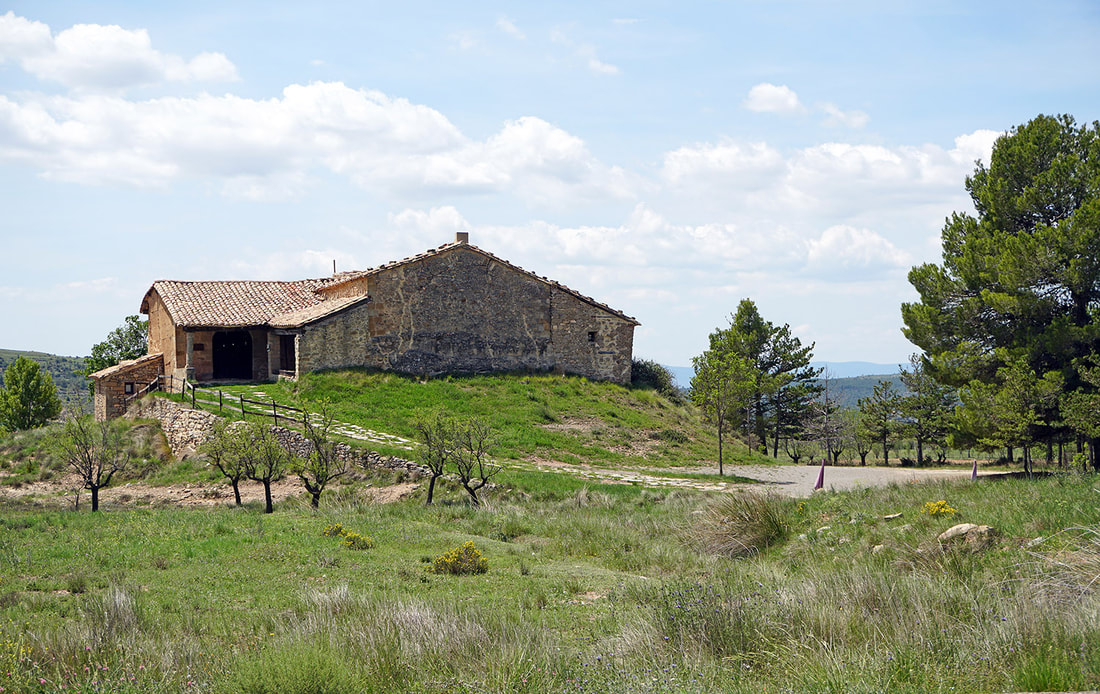
His winery is in the town of Rubielos de Mora, about 90 minutes north of València and in the Sierra de Gúdar-Javalambre mountains. At 1,000 meters in elevation (about 3,200 feet), the town is nestled in a small valley surrounded by the sweeping vistas of the rolling peaks.
The two vineyards used for this bottling, named for the winery’s hometown, are organically farmed and worked only by hand. At such a high elevation, there is a strong diurnal shift in temperature from day to night. Such shifts allow the grapes to ripen slowly in the sunshine while freshness and acidity are encouraged by the cool nights.
This is mostly Garnacha, which is also known by its French name of Grenache, with Tempranillo. Garnacha is a robust red grape popular in the Southern Rhone in France, domestic GSM blends from California and Washington state, and throughout Spain. It tends to produce wines of depth, high alcohol, and moderate tannins with notes of strawberries and spice. Tempranillo is best known as the primary grape in Rioja wines. It is intense in color and classically shows notes of cherries and leather.
Juanvi’s Rubielos de Mora is a remarkably fresh and exciting wine, especially considering this vintage clocks in at 14% ABV. It offers aromas of spices and berries, with touches of melted chocolate and fresh flowers on the finish. Pair this with richly flavored foods such as spicy pork tacos, roast lamb, or hearty vegetable stews.
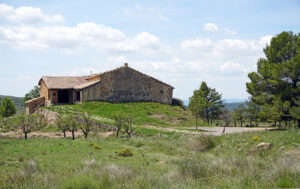
Ready for harvest – photo courtesy of demaisonselections.com/juanvi
